Why Isn’t My AC Keeping Up With the Heat in North Texas?
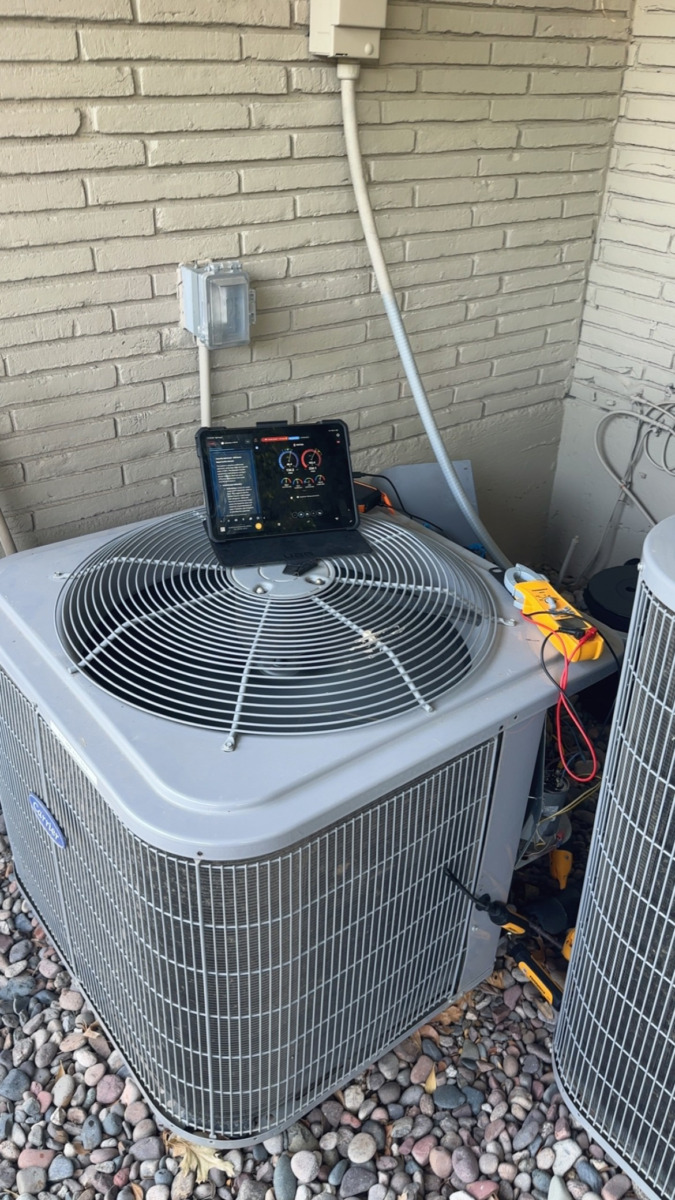
If your AC is running constantly but your North Texas home keeps getting warmer, the system may be dealing with restricted airflow, dirty coils, refrigerant problems, duct leaks, improper sizing, or worn components. Extreme outdoor temperatures increase the cooling load, but a properly operating, correctly sized system should still provide reliable cooling based on the conditions it was designed to handle.
At Designed Air Solutions, we know that an air conditioner struggling during a North Texas summer is more than an inconvenience. It can quickly become a serious comfort problem. Our family-operated team brings more than 55 years of HVAC expertise to residential repair, maintenance, installation, replacement, and system design throughout North DFW. We focus on accurate diagnostics instead of guesswork, looking at the entire cooling system to determine why your home is not staying comfortable. That includes the equipment, refrigerant, airflow, ductwork, thermostat, and system sizing. With straightforward recommendations and a customer-first approach, our goal is to solve the source of the problem and help your AC perform reliably when Texas temperatures put it to the test.
Why Your Air Conditioner Struggles During Extreme Texas Heat
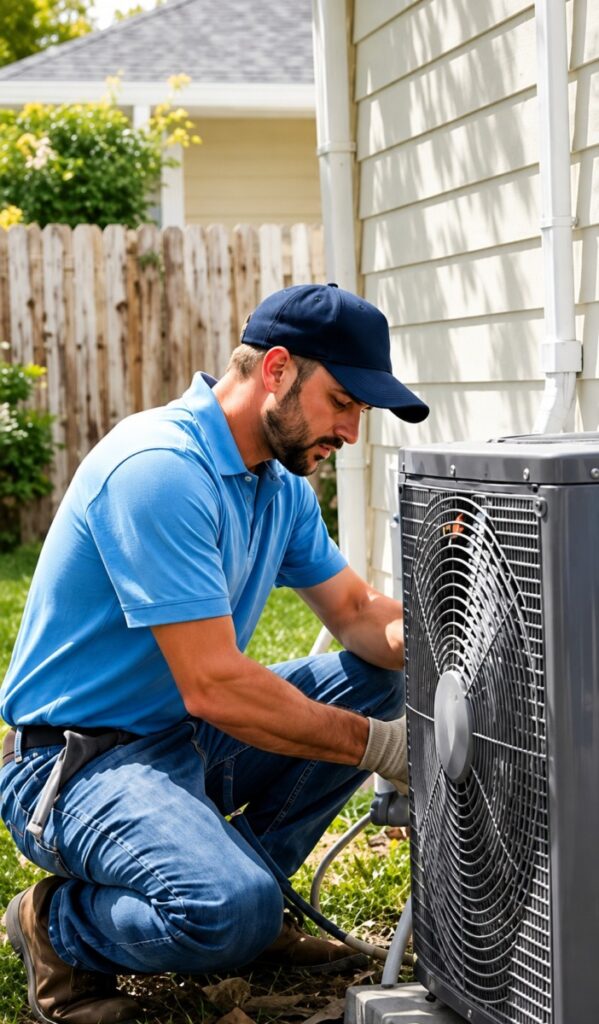
North Texas heat places an enormous demand on residential air conditioning systems. In August 2026, the National Weather Service Fort Worth issued an Extreme Heat Warning that included Frisco, Plano, Allen, McKinney, Lewisville, and other North Texas communities, with temperatures reaching as high as 108°F.
Long periods of extreme heat mean your AC may run for extended cycles. Constant operation on a very hot afternoon does not automatically mean something is broken. The bigger concern is when the indoor temperature continually rises, airflow becomes weak, the air from the vents stops feeling cool, or the system cannot recover after outdoor temperatures decrease.
Why Is My AC Running Constantly but Not Cooling Enough?
An AC that runs constantly without maintaining the desired temperature usually has either a performance problem or a cooling load that exceeds what the system can currently handle.
Common causes include:
- A clogged or overly restrictive air filter
- Dirty evaporator or condenser coils
- Low refrigerant caused by a leak
- Weak blower performance
- Blocked supply or return airflow
- Leaking or poorly designed ductwork
- Thermostat problems
- Aging or failing AC components
- Improper equipment sizing
- Insufficient insulation or excessive air leakage
The U.S. Environmental Protection Agency’s ENERGY STAR program notes that dirty coils reduce an air conditioner’s ability to cool a home and cause the equipment to run longer. ENERGY STAR also reports that airflow problems can reduce HVAC system efficiency by up to 15 percent.
That is why simply assuming an AC needs more refrigerant or a larger unit can lead homeowners in the wrong direction. Proper diagnosis matters.
Can a Dirty Air Filter Make My AC Struggle in Hot Weather?
Yes. A dirty air filter can restrict airflow and make an AC work harder precisely when the system needs maximum airflow.
ENERGY STAR recommends checking HVAC filters monthly, particularly during periods of heavy summer use, and changing them when dirty. At minimum, ENERGY STAR recommends replacement every three months.
If your AC suddenly seems unable to keep up, checking the filter is a simple first step. You should also make sure furniture, rugs, boxes, or other objects are not blocking return or supply vents.
If airflow remains weak after replacing a dirty filter, the problem may be deeper in the system and should be professionally diagnosed.
Could My AC Be the Wrong Size for My Home?
Yes. An incorrectly sized air conditioner can create comfort problems, but bigger is not automatically better.
An undersized system may struggle to remove heat quickly enough during peak conditions. An oversized system can cycle on and off too frequently, which can reduce comfort and humidity control and potentially shorten equipment life.
ENERGY STAR recommends that contractors use the actual characteristics of a home to determine proper HVAC sizing rather than relying on rules of thumb. The organization also emphasizes evaluating airflow, refrigerant charge, and ductwork as part of a quality HVAC installation.
Designed Air Solutions takes the same whole-home approach to HVAC design. Home size matters, but so do layout, insulation, windows, ductwork, airflow, and other factors that influence the home’s cooling load.
How Do I Know Whether the Problem Is My AC or My House?
If the AC itself checks out but your home still struggles to stay comfortable, heat may be entering the house faster than the system can remove it.
Poor insulation, duct leakage, air leaks, sun exposure, and airflow problems can all contribute. Uneven temperatures are another clue. For example, one bedroom staying much hotter than the rest of the house can indicate a duct design, return-air, insulation, or balancing problem rather than a failed air conditioner.
Designed Air Solutions identifies duct design, insulation, airflow balancing, return-air problems, and equipment sizing among the common causes of uneven room temperatures.
Closing blinds or curtains on sun-facing windows, keeping exterior doors closed, replacing dirty filters, and avoiding unnecessary heat-producing activities during the hottest part of the afternoon can reduce the cooling load. These steps can help, but persistent comfort problems deserve a professional evaluation.
When Should I Call an HVAC Technician?
Call for AC service when your system is no longer maintaining reasonable indoor comfort, particularly if its performance has noticeably changed.
Schedule an inspection if you notice:
- Warm air coming from the vents
- Weak or inconsistent airflow
- Ice on the indoor or outdoor refrigerant lines
- Unusual noises or odors
- Rapidly increasing indoor temperatures
- Frequent cycling on and off
- Unexpectedly high energy use
- Large temperature differences between rooms
- An AC that runs continuously without making progress
If you see ice on the system, turn the AC off rather than continuing to run it. Designed Air Solutions notes that frozen systems commonly result from airflow restrictions or refrigerant problems, and continued operation can risk further damage.
Regular maintenance can also help prevent performance problems from appearing during the hottest part of summer. ENERGY STAR recommends annual pre-season cooling checkups, while Designed Air Solutions recommends HVAC service twice yearly, with cooling service in the spring and heating service in the fall.
Frequently Asked Questions About an AC Not Keeping Up
Is it normal for my AC to run all day when it is extremely hot outside?
Long cooling cycles can be normal during extreme North Texas heat. However, if your indoor temperature keeps climbing, airflow is weak, or the system cannot recover when outdoor temperatures fall, the AC should be evaluated.
Should I lower my thermostat if my AC cannot keep up?
Setting the thermostat dramatically lower will not make a standard AC cool the house faster. If the system cannot reach its current setting, lowering the target further usually means it will continue running without addressing the underlying problem.
Does an AC that cannot keep up need to be replaced?
Not necessarily. Restricted airflow, dirty coils, refrigerant issues, duct problems, and failing components may be repairable. Age, repair history, system condition, efficiency, and the cost of repairs should all be considered before deciding between AC repair and replacement.
How long do air conditioners last in Texas?
Designed Air Solutions notes that many HVAC systems last roughly 10 to 15 years, sometimes longer, depending on installation quality, maintenance, usage, and climate. An older system that repeatedly struggles, requires frequent repairs, or has rising operating costs may warrant a repair-versus-replacement evaluation.
Get Your North Texas AC Cooling Properly Again
When your AC cannot keep up with the Texas heat, you should not have to guess whether the problem is the equipment, airflow, ductwork, refrigerant, or system design. Designed Air Solutions provides professional HVAC diagnostics and repair throughout North DFW, including Frisco, McKinney, Prosper, Celina, Plano, Allen, Little Elm, Melissa, Wylie, and surrounding communities.
Ready to get your home comfortable again? Contact Designed Air Solutions to schedule AC service today.